Coronavirus is STILL here and some brands are using Black Lives Matter as a marketing campaign. There’s no time like now to start buying ethically sourced clothing.
Let me explain.
Your favorite fast fashion brand posts something on Instagram to signify solidarity with the Black Lives Matter movement. You get excited and decide to throw them a couple coins in exchange for some threads. After all, you haven’t really bought anything since the pandemic started, so why not? Once you hit that checkout button, a notification is sent to a warehouse full of essential workers. But who are those workers? Do they have protective gear or sick leave? Are they paid a livable wage? Are they allowed bathroom breaks? And even before the packaging process, who sewed that crop top together, and under what working conditions?
The new Instagram page, Pull Up For Change, calls on brands to publicly report how many black people they employ in high and leadership positions, aside from the field, retail store, and customer service levels. “This is a moment for everybody to reflect on the role that they have played in upholding this system of oppression,” Sharon Chuter, the founder of the page, told CNN. “Brands are the custodians of economic participation and they have failed us.”
In the same way, brands will continue to uphold that system of oppression as long as they use sweatshop labor. Here’s what we, as consumers, can do to start shopping more ethically.
Don’t confuse “Sustainable” with “Ethical”
A brand that is sustainable is a brand that tries to reduce its carbon footprint, minimize its water usage, and avoid hazardous chemicals. All great things, but that doesn’t necessarily mean the brand uses factories that pay workers livable wages or provide them with adequate working conditions.
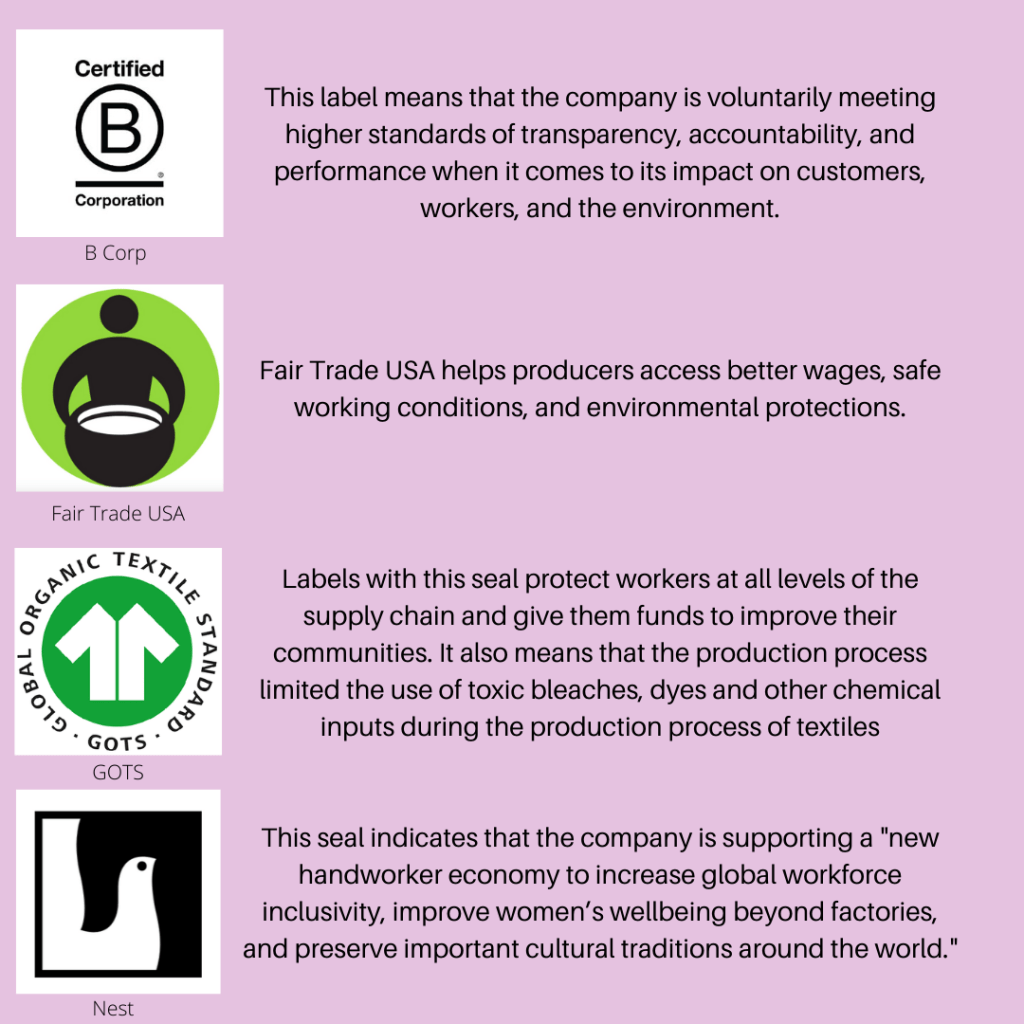
Look out for these official seals
If you don’t see any seals, look for brand transparency
Dig through a company’s About or FAQ page for any mention of ethical or sustainable practices. The more info, the better. When in doubt, slide into the company’s DMs for some more info. Don’t be shy, companies listen to consumers and are open to their feedback because, well, they wouldn’t make money without customers.
Shop second-hand and local
Local shops have smaller inventory and are more likely to have personal connections with their manufacturers, or even make the products themselves. If you prefer shopping online, check out sites like Depop, Etsy, eBay, and Poshmark for little shops and second-hand clothes.
Follow ethically conscious, AKA “slow fashion,” influencers
Welcome to slow fashion Instagram, perhaps one of the most wholesome places on the internet. It even has a #SlowFashionSpiritWeek in May, where seven slow fashion influencers each get a designated day to pick a theme, and the others participate by dressing accordingly in their cutest ethically-sourced outfits. It’s so cute! I would be their friend. Plus, I don’t need to tell you that influencers actually do influence consumer decisions — they don’t call them influencers for no reason. That said, remember that it’s important to fill your feed — and your life — with good influences. Here are a few to start off with.
Use these apps to discover ethical brands



Don’t beat yourself up about it
TBH, in my research for this piece, I realized that shopping ethically is difficult. And while we’re being honest, I don’t even know how many ethically-sourced pieces I currently have in my own closet. But it’s always beneficial to be conscious of where you spend your coins. Baby steps!!!
 kiki
kiki 